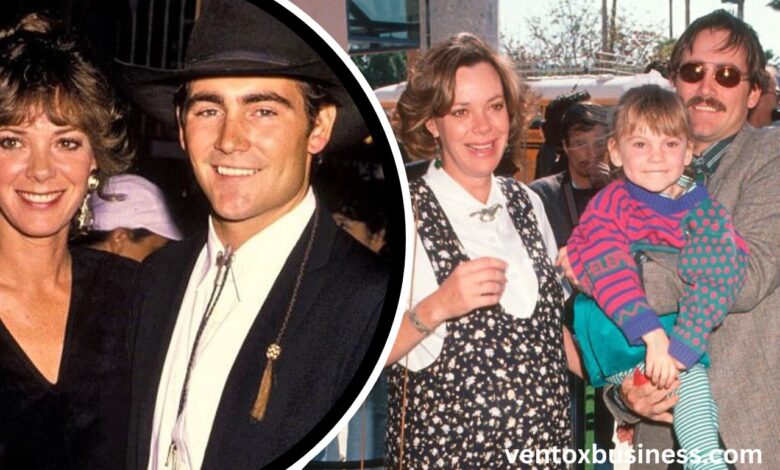
Adam C. Taylor, an assistant director and Hollywood crew member, played an essential yet often overlooked role in the movie industry during the late 1980s and early 1990s. Born June 7, 1966, in Los Angeles, California, Taylor grew up surrounded by the entertainment world. His father, Buck Taylor, was a notable actor famous for his role in Gunsmoke, and his mother, Judy Nugent, also had roots in acting. This family background created an environment steeped in the arts, shaping Adam’s early understanding of film production, storytelling, and the mechanics of Hollywood.
While he may not have been in front of the camera, Taylor’s contributions behind the scenes were critical to the success of major films. Assistant directors, such as Taylor, manage the complex logistics of filmmaking, coordinating actors, extras, and crew while ensuring directors’ creative visions are implemented efficiently. Taylor’s career, though tragically cut short, is a testament to the essential roles that support Hollywood’s most ambitious projects.
Early Life and Family Influence
Growing up in Los Angeles, Adam C. Taylor was immersed in Hollywood culture from a young age. With a father deeply entrenched in the Western genre and a mother with acting experience, Taylor had an early exposure to film sets, scripts, and the intricate network of actors, directors, and crew members that make the movie industry run. His family environment not only nurtured his interest in cinema but also provided connections that would later facilitate his entry into the film industry.
The influence of his father, Buck Taylor, cannot be understated. As a prolific actor in Westerns and a recognizable face on television, Buck Taylor introduced Adam to a world where storytelling and production logistics intersected. Adam’s upbringing was filled with first-hand exposure to both the creative and operational aspects of filmmaking, including observing set coordination, camera placement, and actor direction. This combination of heritage, environment, and personal interest laid the foundation for Taylor’s career as an assistant director.
Hollywood Career and Early Projects
Adam C. Taylor began his professional career as an assistant director, a role that requires precision, multitasking, and deep knowledge of film production processes. Assistant directors are responsible for coordinating schedules, managing on-set logistics, supervising extras, and acting as intermediaries between the director and various departments. While these roles often receive little public recognition, they are vital to the smooth execution of any production.
Taylor’s career was active during a transformative period in Hollywood, where productions became larger in scale and more logistically complex. His work spanned multiple genres, from epic historical dramas to horror-comedy films, reflecting his adaptability and wide-ranging skill set. Among his notable projects were Far and Away (1992), Tombstone (1993), and Leprechaun (1992), each demanding distinct production expertise.
Far and Away: Mastering the Historical Epic
In 1992, Taylor worked as an assistant director on Far and Away, a historical romantic adventure directed by Ron Howard and starring Tom Cruise and Nicole Kidman. The film follows an Irish couple emigrating to America in the 1890s, seeking land, opportunity, and a new life. This production was a massive undertaking, involving period costumes, large-scale crowd scenes, and complex location logistics.
Taylor’s role as assistant director meant coordinating hundreds of extras and ensuring smooth communication between the director, actors, and technical crew. The challenge of filming on location in multiple areas required meticulous planning to maintain schedules and continuity. His contribution to Far and Away exemplifies the critical but often invisible work that assistant directors provide, ensuring that a director’s vision is realized without interruption or delay.
The film itself represents Hollywood’s early 1990s trend toward epic historical narratives. Taylor’s work facilitated the large-scale production elements that brought authenticity and depth to the story, reflecting his ability to handle complex logistical challenges under the pressure of a high-profile studio film.
Tombstone: Reviving the Western Genre
Taylor’s career also included work on Tombstone (1993), a film that has become a cornerstone of the Western genre. Directed by George P. Cosmatos and starring Kurt Russell and Val Kilmer, the movie chronicles the life of Wyatt Earp, Doc Holliday, and the infamous events in Tombstone, Arizona.
The Western revival required careful orchestration of action sequences, including gunfights, horseback riding, and elaborate stunts. Taylor’s role involved coordinating actors, stunt performers, and extras to ensure each scene unfolded safely and effectively. The assistant director is central to managing these logistical challenges, maintaining strict schedules, and keeping both the production team and cast aligned with the director’s vision.
Working on Tombstone placed Taylor in the midst of one of the 1990s’ most enduring Western productions. The film’s success relied on the synergy of technical coordination, actor performances, and historical accuracy — all areas where an assistant director’s contributions are indispensable. Taylor’s work helped the movie achieve its memorable status, cementing his role in the legacy of American cinema.
Leprechaun: Navigating Horror-Comedy Production
Taylor’s experience extended to the horror genre, as demonstrated by his work on Leprechaun (1992), directed by Mark Jones and starring Warwick Davis. The film, a cult favorite, blends horror and comedy, featuring a malevolent leprechaun seeking to recover his stolen gold.
The production of a horror-comedy presents unique challenges, from coordinating practical effects to managing timing for scares and comedic beats. Taylor’s responsibilities would have included supervising the technical crew, ensuring the safe execution of stunts, and orchestrating the complex movements of actors and extras.
Leprechaun’s continued cultural relevance as a cult classic highlights the importance of solid production management. Taylor’s contribution to this film, although behind the scenes, played a critical role in bringing a creative and memorable story to audiences, showcasing his versatility across film genres.
The Role of an Assistant Director: Taylor’s Professional Impact
While the public often focuses on directors and actors, assistant directors like Adam C. Taylor are central to filmmaking. Their work ensures that production timelines are met, scenes are executed safely, and the director’s creative vision is implemented efficiently. Taylor’s career exemplifies the professional skills required for this role: meticulous organization, strong communication, leadership under pressure, and adaptability across multiple genres.
Assistant directors are also instrumental in crisis management on set. Filming often involves unexpected challenges, from weather delays to technical malfunctions. Taylor’s presence on complex productions like Far and Away and Tombstone reflects his capacity to handle high-stakes situations, maintaining order and cohesion among large teams. His work highlights the indispensable contributions of crew members whose efforts remain largely unseen by audiences but are fundamental to the final product.
Personal Life and Family Connections
Adam C. Taylor married actress Anne Lockhart, known for her television and film roles, and together they had two children. His marriage connected him further with Hollywood’s artistic community, creating a family life intertwined with the entertainment industry.
Taylor’s death on June 4, 1994, in a motorcycle accident in Ennis, Montana, tragically ended a promising career at the age of 27. His passing was mourned not only by his family but also by colleagues who recognized his professionalism, dedication, and contribution to Hollywood productions.
Despite his brief life, Taylor’s legacy lives on through the films he helped create and the impact he had on production crews and the assistant director community. His career exemplifies the importance of behind-the-scenes professionals in sustaining the film industry.
Legacy and Cultural Significance
Adam C. Taylor’s contributions highlight the critical role of assistant directors and crew members in Hollywood. His career provides insight into the operational backbone of filmmaking, illustrating how essential coordination, organization, and management are to movie production.
The films he worked on continue to resonate with audiences, from the epic historical narrative of Far and Away, to the Western revival in Tombstone, and the cult horror-comedy of Leprechaun. Taylor’s influence is a reminder that every successful film relies on the collaborative efforts of both visible and unseen professionals.
His life and career also reflect broader trends in Hollywood during the early 1990s: the increasing scale and complexity of film production, the integration of practical effects, and the cultural importance of genre films that appeal to diverse audiences. Taylor’s work is representative of a generation of assistant directors who helped shape modern filmmaking practices.
Conclusion: Remembering Adam C. Taylor
Adam C. Taylor’s story is one of talent, dedication, and the critical importance of behind-the-scenes roles in Hollywood. Though his life was tragically short, the films he contributed to remain a testament to his professionalism and skill. His career underscores the indispensable work of assistant directors and crew members, whose efforts enable directors and actors to bring stories to life.
Taylor’s name may not appear in the limelight, but his legacy is immortalized in the films he helped produce, the production teams he led, and the enduring impact of his contributions to Hollywood’s cinematic history. He remains an example of the countless individuals whose dedication shapes the movies audiences love and remember.