Evy Norlund, the Danish beauty who captivated both European and Hollywood audiences, is a story of glamour, ambition, and timeless elegance. From her early days in Copenhagen to being crowned Miss Denmark in 1958, she carved a path that led her onto the international stage. Her journey from pageantry to Hollywood films, including the iconic The Flying Fontaines, and her marriage to American actor James Darren, highlights a life where talent, charm, and opportunity converged. Beyond her screen appearances, Evy Norlund remains a fascinating figure whose legacy bridges the worlds of European sophistication and classic Hollywood allure.
Early Life and Danish Roots
Evy Norlund was born on April 3, 1938, in Copenhagen, Denmark, during a time when Europe was still recovering from the turbulence of the pre-war and wartime years. Growing up in Denmark, she was raised in a society that valued modesty, hard work, and personal discipline. From an early age, Evy showed signs of a poised and captivating personality, which would later become her trademark. Unlike many actresses who come from artistic families, Evy’s beginnings were humble; she trained as a hairdresser, a vocational pursuit that provided her with a foundation in personal presentation, grooming, and confidence in front of people.
The Danish social milieu of the 1950s, particularly in Copenhagen, provided a fertile ground for young women like Norlund to explore opportunities beyond conventional roles. Danish culture at the time was beginning to embrace modern fashion, pageantry, and international exposure. Evy was drawn to these emerging trends, which would shape her career path and facilitate her later ventures into modeling and acting.
Modeling and Pageant Success
Evy Norlund’s entry into the world of glamour and beauty was both organic and strategic. Her striking features, elegant poise, and natural charisma caught the attention of several influential figures in Denmark. She quickly transitioned from everyday work to modeling, appearing in local magazines and fashion shows that highlighted Danish fashion talent. Her early modeling career allowed her to gain exposure in Copenhagen’s social circles, which included actors, directors, and other artistic influencers.
Her career-defining breakthrough came in 1958, when she was crowned Miss Denmark. This title represented not only beauty but also cultural representation, giving Norlund an international platform and a steppingstone to global recognition. Winning the national crown qualified her to represent Denmark at the Miss Universe 1959 pageant, exposing her to international audiences and leading talent scouts from the United States to notice her potential. While she did not win the Miss Universe title, her performance and stage presence cemented her reputation as a poised and glamorous young woman capable of succeeding on a global scale.
Transition to Hollywood
The late 1950s and early 1960s were a period when Hollywood actively scouted international beauty pageant winners for films and studio contracts. Evy Norlund was no exception. Following her pageant success, she signed a short-term contract with Columbia Pictures, which recognized her potential for screen presence and marketable charm. Hollywood at that time was looking for fresh faces from Europe who could bring sophistication and allure to American audiences, and Evy’s Miss Denmark title made her an attractive candidate.
Her most significant cinematic role came in the 1959 film “The Flying Fontaines”, where she played Suzanne Fontaine, a trapeze artist in a circus-themed story. The film capitalized on the spectacle and drama of circus life, combining breathtaking performances with romantic and adventurous narratives. Although her role was not extensive, it highlighted her agility, elegance, and screen charisma, leaving a lasting impression on audiences familiar with circus and spectacle films. Beyond this movie, she appeared on television series such as Behind Closed Doors and It Takes Two, though often her credits were brief and less documented. Nevertheless, her Hollywood experience, though short-lived, connected her to an era of cinematic experimentation and international glamour.
Life in the Limelight and Jet-Set Society
During her modeling and acting career, Evy Norlund was immersed in the cultural and social life of the Danish and Hollywood elite. In Copenhagen, she became a prominent figure in nightlife and fashion events, frequenting popular cafes and social venues where artists, actors, and influential personalities gathered. Her jet-set lifestyle expanded when she moved to the United States, where she mingled with Hollywood figures, attending studio parties and industry events.
This period of her life was marked by both personal and professional exploration. Norlund demonstrated a blend of European sophistication and Hollywood ambition, navigating the complex social landscapes of two cultures. While her career in Hollywood was brief, it showcased her adaptability and ability to transition between public and private life with grace.
Marriage to James Darren
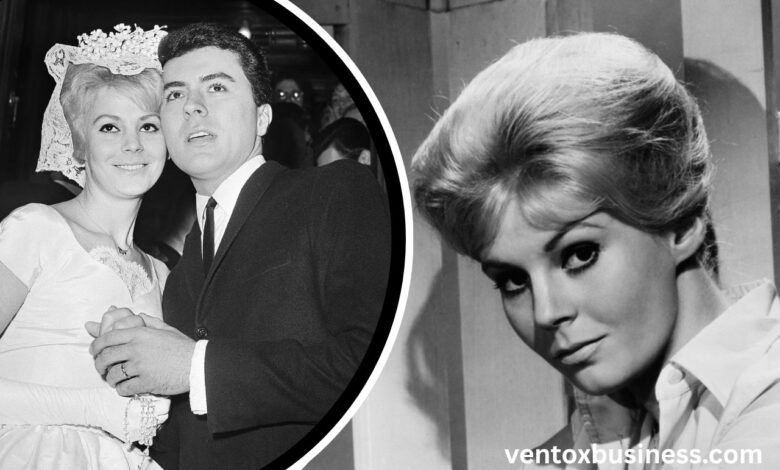
A turning point in Evy Norlund’s life occurred when she met James Darren, the American actor and singer renowned for his role in Gidget and later television series such as T.J. Hooker and Star Trek: Deep Space Nine. Their relationship developed rapidly, fueled by mutual admiration and shared connections within the entertainment industry. The couple married on February 6, 1960, in a ceremony at Vor Frue Kapel, a chapel inside St. Patrick’s Cathedral in New York City.
Marriage to Darren marked a significant shift in Norlund’s priorities, as she began focusing on family life and stepping away from active participation in Hollywood productions. Together, they had two sons, and she became a stepmother to Darren’s older child. Their household, located in Beverly Hills Canyon, was a hub of social and cultural interaction, often hosting figures from the entertainment world and maintaining connections to both European and American social circles.
Later Life and Withdrawal from Public Life
Following her marriage, Evy Norlund consciously chose to retire from professional acting and modeling. She focused on her family and private life, maintaining a low profile while supporting her husband’s continuing career in the entertainment industry. Despite stepping away from the public eye, she remained a figure of cultural significance due to her early accomplishments and her association with Hollywood.
Her decision to prioritize family over career was reflective of broader social norms during the 1960s, when women often faced pressure to balance personal life with professional aspirations. Yet, Norlund’s story is not one of relinquished ambition but of strategic choice, illustrating her ability to navigate both public and private spheres while maintaining dignity and grace.
Legacy and Cultural Significance
Evy Norlund’s life and career, though brief in the public spotlight, offer insights into the dynamics of mid-20th century entertainment, beauty pageants, and international cultural exchange. Her journey from Copenhagen to Hollywood represents the experiences of European women who sought opportunities abroad, bridging the gap between national identity and global ambition.
Her influence lies in her embodiment of elegance, adaptability, and cross-cultural presence. The Miss Denmark crown, her participation in international pageants, and her Hollywood role contribute to her enduring cultural legacy. Moreover, her marriage to James Darren further amplified her visibility within historical narratives of Hollywood’s golden age, connecting her personal story to the broader entertainment history of the United States.
Influence on Beauty Pageants and International Modeling
Evy Norlund’s success in pageants such as Miss Denmark and participation in Miss Universe reflects the broader mid-20th century trend of beauty queens becoming cultural ambassadors. Pageantry in Denmark and globally during this era was not merely about beauty but also poise, intelligence, and representation of national identity. Norlund’s transition to Hollywood highlights the opportunities that pageant recognition could provide, opening doors for international modeling contracts and film opportunities.
Reflection on Her Filmography
Though her filmography is limited, Norlund’s role in The Flying Fontaines captures a specific moment in cinematic history where spectacle, romance, and daring performances converged. Her appearances on television and minor screen credits further demonstrate her willingness to engage with multiple facets of the entertainment industry. These contributions, though subtle, enrich the narrative of European influence on American media and provide a case study of cross-cultural talent mobility.
Read More: Joan Browne: Life, Family, and Legacy
Conclusion
Evy Norlund’s life is a rich tapestry of beauty, ambition, and strategic life choices. From her early life in Copenhagen to her crowning as Miss Denmark, her Hollywood engagements, and her marriage to James Darren, she exemplifies the journey of a European beauty navigating the international stage. While she chose to retreat from public life to focus on family, her legacy remains in the memories of pageant history, her cinematic presence, and her influence as a bridge between Danish culture and Hollywood glamour.
Through Evy Norlund, we see the convergence of opportunity, talent, and personal choice. Her story remains an emblem of an era when beauty, ambition, and cultural mobility intertwined to create a lasting, if understated, mark on history. Her narrative offers inspiration for aspiring models, actors, and international talents seeking to make their own paths while balancing personal priorities with professional aspirations.