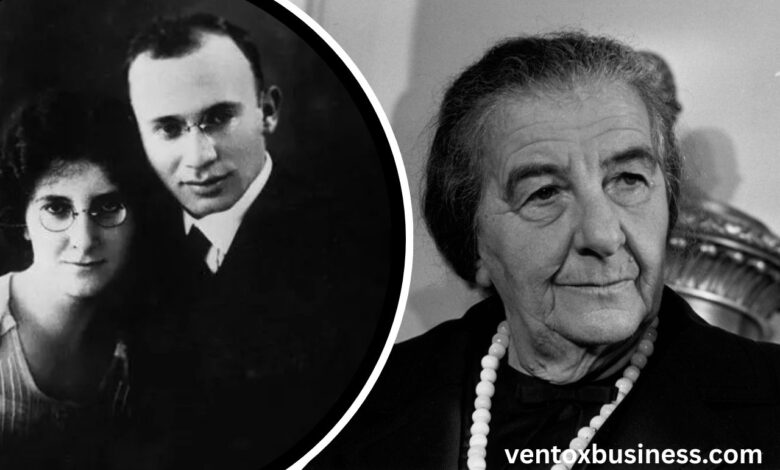
Morris Meyerson (1893–1951) may not be a household name, but his life intersects with one of the most influential figures of the 20th century: Golda Meir, Israel’s fourth prime minister. Born in Chicago during a wave of Jewish immigration from Eastern Europe, Morris’s journey from American cities to Mandate Palestine reflects the hopes, struggles, and ambitions of early Jewish pioneers. As the husband of Golda Meir, he witnessed the transformative years of the Zionist movement, contributed to communal life in the fledgling settlements, and navigated the complexities of family, migration, and personal aspirations. This article explores Morris Meyerson’s life in detail, offering insight into his family, migration story, and historical context, shedding light on a man whose story is inseparable from the foundations of modern Israel.
Early Life and Family Background
Morris Meyerson was born on December 17, 1893, in Chicago, Illinois, during a period of rapid growth and transformation for the American Jewish community. His family, like many Jewish immigrants of the era, was part of a larger wave of migration from Eastern Europe, fleeing persecution, anti-Semitic pogroms, and economic hardship in the Russian Empire and surrounding regions. Chicago in the late 19th and early 20th centuries was becoming a major hub for Jewish immigrants, with vibrant communities forming in neighborhoods that offered both opportunity and cultural familiarity. Morris grew up in this environment, shaped by both the challenges of immigrant life and the strong traditions of Jewish religious and cultural education. The Meyerson family, although striving for economic stability, was deeply connected to Jewish communal life, which would later influence Morris’s decisions and relationships in adulthood.
Marriage to Golda Meir
One of the most significant aspects of Morris Meyerson’s life was his marriage to Golda Mabovitch, who would later become the world-famous Israeli leader Golda Meir. Golda, born in Kyiv, Ukraine, emigrated to the United States with her family as a child and settled in Milwaukee, Wisconsin. In Milwaukee, Golda became active in Zionist youth movements, and it was here that she met Morris Meyerson. The couple married on December 24, 1917, at a time when the Jewish community in Milwaukee was relatively small but highly engaged in social and political organizing. Their marriage represented a union not only of two individuals but also of shared cultural and ideological values, including a commitment to Jewish identity and the burgeoning Zionist movement.
Life in the United States and Early Zionist Influence
During their early years of marriage, Morris and Golda were part of a broader Jewish-American milieu deeply influenced by political debates about Jewish identity, socialism, and the question of a Jewish homeland. The early 20th century in the United States saw a surge of interest in Zionist ideas, particularly among Jewish youth who had experienced or learned about the hardships of life under anti-Semitic policies in Eastern Europe. Morris Meyerson, while not as politically active as Golda, supported her growing involvement in Jewish activism and Zionist initiatives. Their life in Milwaukee offered a mix of traditional domesticity and engagement with these ideological currents, providing a foundation for their later decisions.
Migration to Mandate Palestine
In 1921, Morris and Golda joined the wave of Jewish pioneers participating in the Second Aliyah, a movement of immigrants from Europe and America to Palestine, then under British control. The Second Aliyah was motivated by both Zionist ideology and the desire to build a Jewish homeland through agricultural settlement and communal living. Morris and Golda settled in Palestine and became part of the early kibbutz movement, which emphasized collective labor, shared resources, and the establishment of sustainable agricultural communities. Life in the kibbutz was demanding, requiring hard labor, resilience, and adaptation to harsh environmental conditions. While Golda increasingly engaged in political activism and labor organizing, Morris preferred the quieter, more private aspects of community life, contributing to the development of the settlement through practical work and local involvement.
Family Life and Children
Morris Meyerson and Golda Meir had two children, Menachem and Sarah, who were born during their early years in Palestine. Menachem, born in 1924, later pursued a career in music as a professional cellist, while Sarah was born in 1926 and grew up in the formative years of the Zionist movement. The family’s life in Palestine was closely intertwined with the broader historical context of Jewish migration, settlement building, and the political struggles that eventually led to the establishment of the State of Israel. Although Morris and Golda’s marriage eventually became strained due to diverging aspirations, their family ties and the upbringing of their children remained a crucial aspect of their shared legacy.
Marriage Challenges and Diverging Paths
Despite their early commitment to each other, Morris Meyerson and Golda Meir eventually grew apart. Golda’s increasing involvement in public life, political organizing, and leadership roles within the Zionist movement contrasted with Morris’s preference for a more private and subdued lifestyle. Their marriage, while never formally dissolved, effectively ended as Golda’s career took her into the forefront of political leadership in Palestine and later Israel. Morris continued to live a relatively private life, contributing to community development and supporting his family behind the scenes, reflecting the varied roles individuals played in the broader historical transformations of the period.
Later Years and Death
Morris Meyerson spent his later years in Jerusalem, witnessing the dramatic changes in the region and the eventual establishment of the State of Israel in 1948. He passed away on May 25, 1951, and was laid to rest at Nahalat Yitzhak Cemetery, a historic cemetery known for being the final resting place of many early Zionist pioneers and Jewish community leaders. His life spanned a period of remarkable social, political, and cultural upheaval, from the waves of Eastern European migration to the realization of a Jewish state, and his experiences reflect both the personal and collective dimensions of Jewish history during the first half of the 20th century.
Historical and Cultural Context
Understanding Morris Meyerson requires situating him within the broader currents of Jewish history in the early 20th century. The migration of Jews from Eastern Europe to America and Palestine was not just a physical relocation but also a movement shaped by ideology, culture, and the quest for self-determination. The Second Aliyah brought pioneers committed to building agricultural communities and creating the foundations of a Jewish state. Kibbutzim, such as those Morris and Golda were associated with, became laboratories for social experiments, communal labor, and the cultivation of collective identity. Morris Meyerson’s life, though less politically prominent than Golda’s, represents the lived experience of countless Jewish men and women who contributed to the physical and social infrastructure of these early communities.
Legacy and Memory
Although Morris Meyerson did not achieve fame or widespread recognition, his life is historically significant as part of the personal narrative behind one of Israel’s most influential leaders. His experiences highlight the often-overlooked contributions of those who supported pioneering figures while maintaining private, domestic, and community-focused roles. His story also provides insight into the challenges faced by Jewish immigrants in balancing personal aspirations, family obligations, and ideological commitments. Today, historians and genealogists consider Morris Meyerson an important figure in understanding the familial and social networks that shaped the early Zionist movement and the lives of those who laid the foundations of modern Israel.
Read More: Jayni Chase: A Deep Dive into Her Life, Career, and Environmental Advocacy
Conclusion
Morris Meyerson’s life is a testament to the intertwining of personal, familial, and historical forces. From his birth in Chicago to his migration to Palestine, from his marriage to Golda Meir to his quiet contributions to community life, he navigated the complexities of a world undergoing dramatic transformation. While history primarily remembers Golda Meir for her leadership, Morris Meyerson’s story provides a richer understanding of the domestic, social, and cultural dimensions that underpinned the creation of Israel and the experiences of Jewish immigrants in the 20th century. His life reminds us that history is composed not only of prominent public figures but also of the countless individuals whose everyday efforts make lasting impacts on family, community, and nation.