Daphna Kastner is a Canadian actress, writer, and film director whose career spans more than four decades, beginning in the early 1980s. Born in Montréal, Québec, Kastner emerged in a vibrant cultural environment that influenced her creative path and enabled her to merge artistry and performance. Throughout her career, she has demonstrated a rare versatility, moving seamlessly from acting roles to crafting original stories and directing films. Kastner’s body of work reflects her passion for character‑driven narratives, cultural exploration, and intimate storytelling — placing her among the distinctive voices of independent cinema.
Early Life and Influences in Montréal
Daphna Kastner was born on April 17, 1961, in Montréal, Québec, Canada, one of the most cosmopolitan cities in North America with deep roots in both English and French artistic traditions. Growing up in such a culturally rich atmosphere likely played a significant role in shaping her sensibilities as a storyteller. Montréal has long been home to filmmakers, painters, writers, and theatre artists, and this vibrant backdrop offered Kastner exposure to diverse art forms. Her early life before entering the film industry is not extensively documented, but it is clear that Montréal’s bilingual and multicultural setting had an impact on her eventual artistic choices.
Kastner’s entry into cinema in the early 1980s came at a time when independent filmmaking was gaining traction worldwide. The Canadian film scene, particularly in Québec, was supportive of experimental and narrative cinema that diverged from the mainstream Hollywood model. This environment allowed nascent talents like Kastner to explore roles that were grounded in emotional authenticity rather than formulaic casting.
Career Beginnings and Rising Acting Roles
Daphna Kastner’s on‑screen journey began with small but meaningful roles in feature films during the early 1980s. One of her earliest appearances was in The Lonely Lady (1983), a film that marked her introduction to cinema and gave her the essential experience of working in a structured production environment. Shortly afterward, she appeared in Evixion (1986), a project that further showcased her willingness to take on roles that were diverse and challenging.
As the 1980s transitioned into the 1990s, Kastner’s acting career began to expand. Films like Girlfriend from Hell (1989) and Eating (1990) allowed her to tap into both comedy and drama, demonstrating her range as a performer. Eating in particular drew attention for its blend of humor and nuanced social commentary, and Kastner’s performance was noted for its authenticity and depth. Over the years, she continued to build a rich portfolio of roles, appearing in Crack Me Up and Julia Has Two Lovers in 1991, and later in Lana in Love and Venice/Venice in 1992. These films varied in tone and subject matter but collectively showcased Kastner’s flexibility in portraying complex characters with emotional truth.
Rather than being pigeonholed into typical roles, Kastner navigated an eclectic range of parts — comedic, dramatic, romantic, and introspective — establishing herself as a performer who could carry scenes with both subtlety and presence.
A Creative Turn: Writing and Directing French Exit
By the mid‑1990s, Daphna Kastner was not only established as an actress but also ready to take control of storytelling from behind the camera. Her directorial debut came with French Exit (1995), a romantic comedy that she co‑wrote and directed. The film follows two struggling screenwriters, Jean and Michael, whose personal and professional lives intersect and clash in ways that mix humor with the anxieties common to creative artists. It takes an honest look at ambition, romantic entanglements, the weight of expectation, and the unpredictable nature of artistic careers.
In French Exit, Kastner’s voice as both a writer and a director became evident: she was interested in human relationships, the pressures of creative work, and the comedy that ensues when two people try to balance love and aspiration. While the film received mixed responses from critics, many recognized its authentic tone and the relatable struggles of its characters. In a landscape where independent romantic comedies were often overshadowed by bigger studio productions, French Exit stood out for its grounded approach and genuine character interplay.
This creative shift was significant because it marked Kastner’s evolution from performer to auteur — someone who shapes narrative and performance simultaneously. At a time when women directors were still underrepresented in the industry, her movement into writing and directing was both bold and pioneering.
The Cross‑Cultural Narrative in Spanish Fly
Following French Exit, Daphna Kastner wrote, directed, and starred in Spanish Fly (1998), a romantic comedy with a distinct cross‑cultural edge. The film centers on Zoe, an American journalist who travels to Spain to research her book about machismo culture. What begins as a professional assignment quickly becomes a personal journey as Zoe navigates language barriers, cultural misunderstandings, and unexpected romantic encounters.
In Spanish Fly, Kastner plays Zoe with a blend of vulnerability, humor, and determination. The film explores not just the differences between American and Spanish social expectations, but also the universal challenges of relationships, self‑confidence, and identity. The narrative dives into questions about gender roles, assumptions, and emotional growth, all wrapped in the framework of a romantic comedy.
Critics and audiences offered a range of responses to Spanish Fly. Some viewers appreciated its humorous yet thoughtful take on cultural stereotypes, while others found its pacing and narrative focus more uneven. Nonetheless, the film stands as a testament to Kastner’s willingness to tackle cross‑cultural themes and to use comedy as a vehicle for deeper social inquiry. By filming in Spain and integrating local culture and language into the storyline, Kastner expanded her creative footprint beyond North American cinema and connected with international audiences.
Acting Continuity and Later Career Choices
While Daphna Kastner continued to develop in her roles as a writer and director, she never abandoned her roots as an actress. In the early 2000s, she appeared in Timecode (2000), a film known for its split‑screen narrative and ensemble performance structure. The movie experimented with overlapping timelines and interwoven character arcs — reflecting Kastner’s ongoing appeal for stories that highlight human connectivity and moment‑to‑moment emotion.
In 2001, she appeared in Eden, and later in My Sexiest Year (2007), a coming‑of‑age film that once again showed her commitment to diverse roles across generations and genres. While her later acting credits may not have been as frequent as her earlier work, they continued to reflect her dedication to performance craftsmanship and her desire to contribute meaningfully to every project she joined.
Kastner’s career choices illustrate an artist who refuses to be boxed into a single niche. Whether she is in front of the camera or guiding production from behind it, her work consistently centers on emotional resonance, character exploration, and narrative authenticity.
Personal Life and Relationship with Harvey Keitel
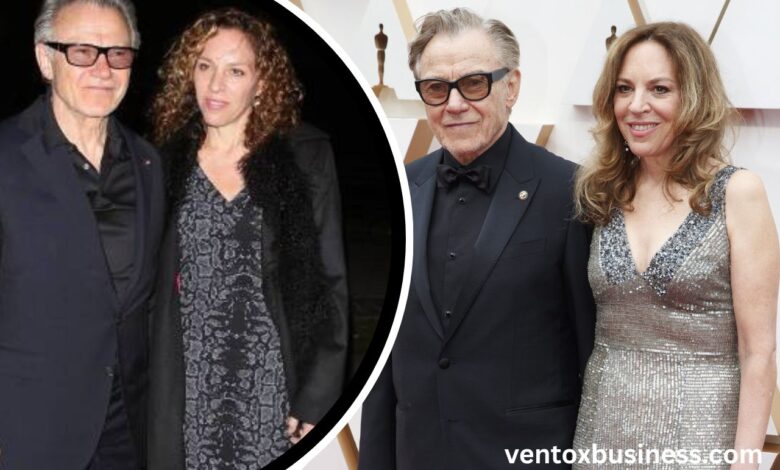
Beyond her professional life, Daphna Kastner’s personal journey has also captured public interest, particularly through her long‑term marriage to acclaimed American actor Harvey Keitel. Keitel is known for iconic roles in films like Reservoir Dogs, Pulp Fiction, The Piano, and many others — making him one of the most respected actors of his generation.
Kastner and Keitel first met in the 1980s but became a couple later, reconnecting over shared artistic interests and personal compatibility. Their relationship culminated in a secret wedding ceremony in Jerusalem in 2001, where they married while attending the Haifa International Film Festival. The following celebrations took place in Manhattan, New York, with friends and colleagues from the film community, including actor Robert De Niro. The couple has one son, Roman, born in August 2004.
Their marriage represents a long partnership between two artists who balance public visibility with personal privacy. Despite Keitel’s higher mainstream profile, Kastner has maintained her own independent artistic identity — illustrating that creative life can flourish on multiple fronts within a partnership.
Artistic Style, Themes, and Legacy
Throughout her career, Daphna Kastner’s artistic style has been rooted in stories that engage with real human experiences — particularly those that revolve around relationships, identity, and cultural nuance. Whether as an actress, a writer, or a director, her work often reflects an awareness of emotional complexity and an interest in how individuals negotiate expectations versus reality.
Her films do not rely on broad spectacle but instead focus on character nuance and relational dynamics. In French Exit and Spanish Fly, she shows that romantic comedy can be more than genre — it can be a lens through which deeper questions about culture, ego, and emotional vulnerability come to life. By choosing projects that prioritize human connection and introspection, Kastner aligns herself with independent cinema’s core values — where narrative honesty and character depth are paramount.
As a female filmmaker, her transition from acting to writing and directing in the 1990s and early 2000s places her among the generations of women who helped broaden cinematic authorship at a time when the industry was still solidly male‑dominated. Her work doesn’t fit into mainstream blockbuster trends, but it does resonate with audiences who value storytelling that is both authentic and emotionally engaging.
Read More: Lisa Pemberton: A Life Beyond the Spotlight
Conclusion: The Enduring Impact of Daphna Kastner
Daphna Kastner’s story is one of creative evolution, artistic determination, and narrative curiosity. From her early days in Montréal to her expanded roles in international cinema, she has demonstrated that storytelling can take many forms — and that an artist willing to explore beyond conventional boundaries can leave a lasting imprint. Her career encompasses acting, writing, and directing; each facet informs the others and creates a body of work that reflects personal insight and artistic courage.
In an industry where many performers stay in front of the camera or behind it exclusively, Kastner’s ability to cross those lines has made her a unique and compelling figure. Her commitment to character‑driven cinema, her exploration of cultural themes, and her determination to tell stories on her own terms contribute to a legacy that inspires both audiences and fellow filmmakers who seek depth and authenticity in cinematic expression.